
Services
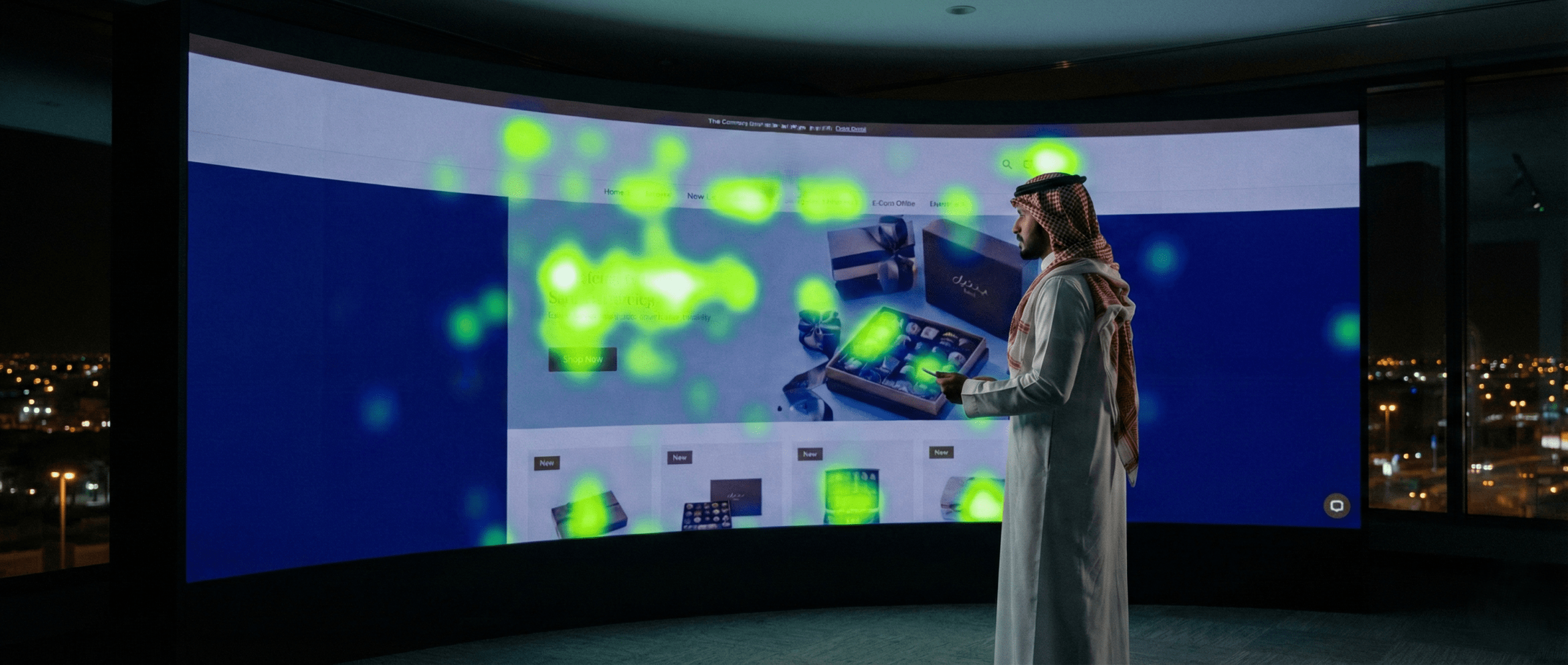
Are you losing more than 70% of your customers at the checkout step because of a complicated user experience? It's a shocking fact, but it happens every day in Saudi Arabia's fiercely competitive e-commerce market. Building trust takes a long time, yet cart optimization (Cart Optimization) can collapse in seconds due to a complicated interface design or unclear checkout steps. The key to success for Saudi stores lies in simplicity and ease. Using UX/UI tools for Saudi e-commerce stores ensures you address these pain points, turn visitors into loyal buyers, and meet the Saudi customer's desire for a fast, standout shopping experience. It's no longer just about displaying products; it has become an art of engineering the user journey so they click the buy button without hesitation. In this practical guide, the Saudi entrepreneur will learn the following:
Steps to Building a Successful Online Store in Saudi Arabia
The Saudi consumer is a smart, connected shopper with world-class experience buying from major retailers. So it's not enough for your store to be “good”; it must be “exceptional” in its usability. UX is the dividing line between a successful purchase and a cart abandoned forever.
Imagine your store gets a thousand visitors a day, 700 of them add a product to the cart, but 500 leave at the checkout step. A massive loss! This is the cart abandonment crisis. The main reasons for cart abandonment in the Saudi market:
UX/UI tools for Saudi e-commerce stores steps in here to analyze these reasons precisely. The focus is that the high expectations for service quality in Saudi Arabia demand a flawless user experience; this is the secret to cart optimization and increasing your profits.
Customers in the Kingdom tend to favor brands that offer them a smooth experience and clear details. Simple, elegant design reinforces the sense of trust and professionalism for the Saudi customer, leading to a faster purchase decision. Three psychological factors that influence the purchase decision:
Success in Saudi Arabia requires committing to the demands of the local market. And that requires the best Saudi UX UI tools to be able to support the following:
The journey of e-commerce store design professionally begins before a single line of code is written. It starts with designing the user interface (UI) and prototype models. These are the tools that turn the initial idea into a testable visual structure.
Figma is, without dispute, the world's leading tool in e-commerce store design and user interfaces, and it's an excellent choice for teams working in Saudi Arabia, including Bateel Tech. Why Is Figma the Best?
Despite Figma's dominance, strong alternatives still exist:
| The Tool | Key advantage | Approximate Cost (Professional Plan) | Best for |
| Figma | Cloud collaboration and building design systems | starts from $12 per month/per user | Startups and large teams |
| Sketch | Custom interface design on Mac | $10 per month/per user | Freelance designers or small companies (Mac-only) |
| Adobe XD | Integration with other Adobe programs (Illustrator, Photoshop) | Included in the Creative Cloud bundle | Designers who rely on the Adobe environment |
All of these tools are considered among the best Saudi UX UI tools and should be chosen based on your team's working environment.

Prototype testing is your proactive step to avoid costly changes after development. Figma lets you create interactive mockups that can be shared with potential customers to gather their feedback. How Does Prototype Testing Save Time and Money?
Aesthetics alone aren't enough; the design must prove its success with data and numbers. This is the role of behavioral analytics tools that tell you what the visitor actually does on your store, not what they say they do.
Imagine having a camera that records the eye and mouse movements of every visitor to your store! That's what tools like Hotjar or Microsoft Clarity.
To understand the data these tools surface, you need to know your customer's path. Read our guide on mapping the customer journey from visit to purchase
A/B testing is the scientific method for improve conversions. It's simply testing two different versions of a page (A and B) on two identical audience segments to determine which delivers better results. Practical application:
Our guidelines at Bateel Tech emphasize that testing must be driven by a clear goal (for example: increasing the click rate on the add-to-cart button) and must run long enough to reach statistically significant results.
These tools (such as Google Analytics 4 or Hotjar Funnels) track the customer step by step from the moment they enter the store until they complete the purchase. How Do They Help With Cart Optimization? They pinpoint exactly the step where customers leave most often. Example: if you discover that 40% of customers leave between the “enter address” step and the “choose payment method” step, you know the problem lies in the shipping options or the lack of clarity around the delivery process.
Successful UX isn't just tools; it's the application of a deep understanding of user behavior — especially when it comes to Arabic, which is read right to left (RTL).
In Latin (LTR) reading, users tend to scan the page in an F or Z shape. In Arabic (RTL), this pattern is reversed. Practical Application of Successful Design Patterns (RTL):

The product page is the most important page in your store, and its purpose is to remove any doubt that might stop the customer from adding the product to the cart. The core persuasion elements supported by UX tools:
This is where every effort of e-commerce store design is crowned with success. The checkout process must be easy to the point of boredom. A checklist of the ideal checkout page for cart optimization:
Great design needs a strong technical foundation. Discover the importance of site speed and data security in improving the customer experience in our next article.”
You've now learned about the best Saudi UX UI tools for designing successful interfaces, from Figma all the way to Hotjar heatmaps. The key isn't the tool, but the expertise you use to apply successful design patterns that match local consumer behavior. However, using these tools and turning data from heatmaps and A/B tests into effective design improvements in e-commerce store design requires a team with the expertise to read and interpret the data precisely. It's a complex analysis and engineering process that an entrepreneur can't do alone. At Bateel Tech, we're one integrated team combining UX/UI designers, conversion (CRO) analysts, and e-commerce developers to ensure every element in your store works as a silent salesperson around the clock. Now that you've seen the best UX/UI tools for your store, let us review your store's experience with you and suggest the improvements that will lift your sales.
In closing, remember that investing in UX/UI tools for Saudi e-commerce stores is a direct investment in revenue, not merely a design cost.
Don't let abandoned carts steal your sales. Start today by designing an experience worthy of distinction for your online store.
We recommend starting with Figma for the initial design and Microsoft Clarity for free behavioral analytics — both among the most the best Saudi UX UI tools effective. You can begin with free analysis before investing in advanced tools like Hotjar.
The tools don't guarantee improvement; they reveal the causes. These tools help you pinpoint the “friction” points precisely, and once you address them according to successful design patterns that suit the Saudi market, you'll see a noticeable drop in abandoned carts and an increase in sales.
The process of analysis, testing, and launching the new design may take between two and four weeks, depending on the store's size and the number of landing pages to be tested, but the result is a fresh interface designed for cart optimization.
Bateel Tech takes on applying these tools and analyzing their data precisely, and designing new interfaces (UI/UX) using Figma and CRO experts, to ensure e-commerce store design that achieves the highest conversion rates in the local market, from the message all the way to completing the payment.
