
Services
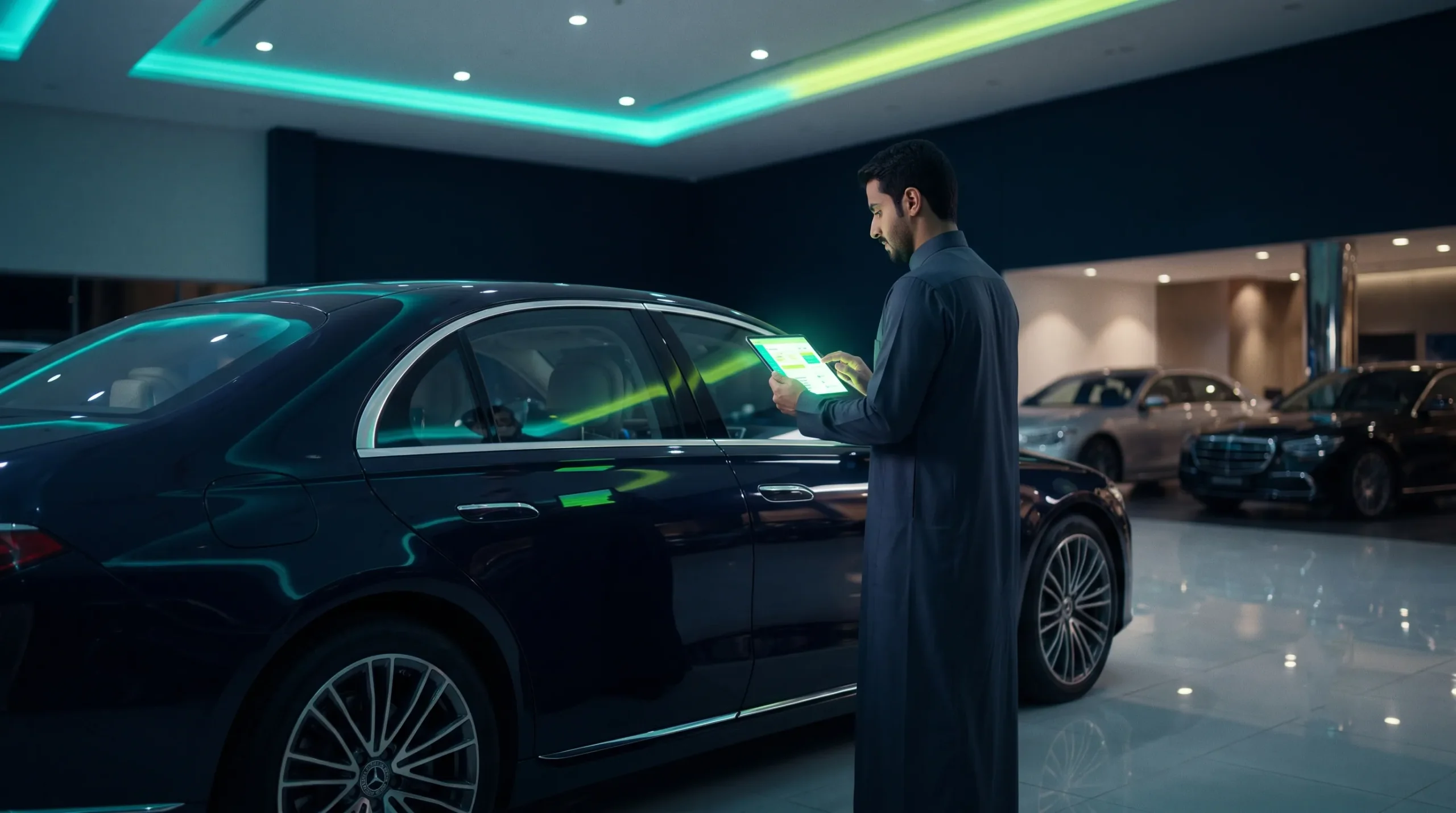
Every successful car dealership owner is looking for the car dealership management system that gives them full visibility over inventory, sales and profits on a single screen, instead of moving between scattered Excel files, paper reservation books and WhatsApp groups. The Saudi automotive market is going through unprecedented growth driven by the targets of digital transformation and Vision 2030, and competition today is no longer only about who owns the best cars, but about who manages them more intelligently. This is where Odoo emerges as the most practical solution: an integrated ERP platform that brings inventory, sales, accounting, financing, maintenance and customer relations together in one Arabic system compliant with the requirements of the Zakat, Tax and Customs Authority. In this guide we explain in detail how Odoo works for car dealerships, which modules you need, and what implementation costs in Saudi riyals — with a realistic scenario of a Saudi dealership that moved from chaos to efficiency.
Before talking about solutions, let us put a finger on the wound. Most car dealerships in Saudi Arabia — especially small and mid-sized ones — are still run with a mix of Excel, paper ledgers and staff memory. This approach was acceptable ten years ago, but today it costs the dealership real money every month: lost deals, stagnant stock nobody notices, and tax penalties that could have been avoided. And the bigger the dealership grows, the more the chaos multiplies instead of the profit. Here are the main challenges we hear from dealership owners in the very first analysis session:
A car is not an ordinary product; every vehicle is a unique unit with its own chassis number, model, colour, mileage and status (new, used, reserved, in maintenance, sold). When a dealership holds 80 or 200 cars spread between the main showroom, a second branch, a warehouse and a preparation workshop, a simple question such as "where is the silver 2025 Camry?" becomes an hour of phone calls. Worse still: selling a car that was already reserved to another customer because the status was not updated — a mistake that destroys the dealership's reputation.
The salesperson sends the price to the customer over WhatsApp, the manager grants a verbal discount, and by month end nobody knows how many quotations were issued, how many converted into actual sales, or why the rest were lost. No unified record of quotations means no ability to improve performance.
Since the Zakat, Tax and Customs Authority (ZATCA) mandated e-invoicing across both of its phases, issuing a manual invoice or an ordinary PDF is no longer a legal option. Car dealerships are required to issue electronic invoices connected to the Fatoora platform, with precise VAT calculation — including profit-margin cases for eligible used cars — and any error here means penalties starting in the thousands of riyals.
A large share of car sales in the Kingdom goes through bank financing or direct instalments from the dealership. Following up financing applications with banks and finance companies, scheduling instalments, and flagging late collections — all of this is usually managed on manual Excel sheets prone to being forgotten or mistyped, which means lost liquidity and bad debt the owner only discovers too late.
What is the dealership's net profit this month? Which models turn over fastest and which have been sitting for 90 days? What is the actual preparation cost of each used car? A dealership owner running the business the traditional way needs days to assemble approximate answers, while good decisions need precise, real-time numbers.
Odoo is a global open-source ERP platform used by more than 12 million users worldwide, with over 40 integrated applications that can be fully customised to become the car dealership management system built to the measure of your business. Unlike closed off-the-shelf software, Odoo does not impose a rigid way of working on you; it is shaped around your actual workflow. The core advantage is that all modules run on one database: a car entering inventory appears automatically in sales, the invoice is reflected immediately in accounting, and customer data updates in CRM. And if you would like to understand the Odoo platform more deeply before customisation, we recommend reading the complete guide to Odoo ERP in Saudi Arabia. As for car dealerships specifically, here is how Odoo addresses each challenge:
In the inventory module, each car is registered as an independent unit with a record containing: model, year of manufacture, exterior and interior colour, mileage, fuel type, specifications, multiple photos, purchase price, preparation costs, and target selling price. Odoo supports multiple locations, so you know in real time where every car stands: the main showroom in Riyadh, the branch in Jeddah, the warehouse, or the detailing workshop. And the car's status changes automatically along its life cycle: available, reserved with a deposit, under financing, sold, delivered.
This is where Odoo's real strength for the automotive sector shows: serial number tracking is used to follow the VIN of every vehicle from the moment of purchase until delivery. By scanning the VIN barcode or searching for it, you instantly get the car's complete history: which supplier it was bought from and at what price, what preparation and maintenance work was carried out and at what cost, who reserved it and who bought it, and the actual profit margin after deducting every cost. This level of tracking is impossible to achieve in Excel, and it is what prevents costly mistakes such as delivering a car with different specifications from those agreed.
The sales module in Odoo issues professional quotations in the dealership's brand identity within minutes, including car photos, specifications, price, tax and payment terms, sent to the customer as an online link they can approve and sign digitally. Every quotation has a validity period and a clear negotiation record, and any discount beyond the permitted limit requires manager approval inside the system. Once the quotation is approved, it converts with one click into a sales order and then an invoice, and the car is automatically reserved in inventory so it cannot be sold twice.
Odoo supports the different sales scenarios in the Saudi market: cash, bank financing, and direct instalments from the dealership. In the bank financing case, the system tracks the application status with the finance provider (awaiting approval, approved, rejected) and links the bank payment to the invoice. For direct instalments, the system automatically creates an instalment schedule with due dates, sends collection alerts, and displays an ageing report so the owner knows exactly who is late and how much is overdue — before it turns into unrecoverable debt.
If your dealership offers maintenance or preparation services, the maintenance and work orders module in Odoo runs the whole workshop: opening a repair order linked to the car's VIN, recording the spare parts used and deducting them automatically from parts inventory, calculating labour hours, then issuing the service invoice. The system also tracks warranties and periodic service dates and sends reminders to customers — a recurring revenue channel that brings the customer back to your dealership instead of neighbourhood workshops.
Every enquiry that reaches the dealership — a call, a WhatsApp message, a website form, a visit — is logged as a sales opportunity in the CRM module with the customer's name, the car they are interested in, and their budget. Opportunities move through clear stages (interest, test drive, negotiation, deposit, closing), and the sales manager knows every representative's performance in numbers. CRM can also be connected to your advertising campaigns so you know which channel brings actual buyers rather than mere visitors; we implement this integration for our clients as part of our Odoo ERP development service from Bateel Tech to turn your advertising budget into precisely measured deals.
Are you ready to run your company on Odoo ERP?
Get a free assessment of your company's needs from Bateel Tech's Odoo specialist team.
When comparing Odoo with any off-the-shelf car dealership program or traditional accounting system, a set of advantages clearly distinguishes it as a long-term strategic choice:
A dedicated dashboard showing on a single screen: the number of available and reserved cars, today's and this month's sales, profit margin per category, stagnant cars that have passed 60 days, and instalments due this week. The owner who used to wait for the accountant's month-end report now sees real numbers from their phone while travelling.
Odoo works through both the browser and the mobile app, so the salesperson on the showroom floor can open any car's record in front of the customer, photograph a used car that has just arrived and add it to inventory within minutes, and issue the quotation on the spot without going back to the office. This translates directly into faster deal closing.
Any car dealership management program in Saudi Arabia should answer decision questions, not merely store data. Odoo's reports reveal: the fastest-turning and most profitable models, the average time a car stays in inventory per category, the performance of each representative and each branch, and the highest-converting customer sources. These are the numbers that determine where you put your capital in the next buying season.
You start with four core modules, and when you open a new branch or add a maintenance or spare parts department, you activate the required module on the same database without changing the system or re-entering data. This flexibility protects your investment and spares you the "change the system every three years" ordeal familiar to users of closed off-the-shelf software.
This point alone is reason enough for many dealerships to move to Odoo. The system is compliant with the requirements of the Zakat, Tax and Customs Authority in the second phase (the integration phase), so your tax invoices are issued electronically in the approved XML format with a QR code, and sent in real time to the Fatoora platform for clearance before being handed to the customer. The system handles tax invoices for companies and simplified invoices for individuals, and calculates VAT automatically according to the type of transaction — including the profit-margin mechanism on eligible used cars, which substantially reduces the tax burden on dealerships. And when a credit note is issued to cancel a reservation or process a return, everything is documented according to the Authority's requirements. The result: zero penalties, and a tax return prepared with a click instead of a week of manual reconciliation.
Not every dealership needs every Odoo application; one of the system's main advantages is that you start with the core modules and add the rest as your business grows. This table summarises the modules we recommend for a Saudi car dealership and the role of each:
| Module | Its role in the dealership | Priority |
|---|---|---|
| Inventory | Registering vehicles and tracking VIN, status and multiple locations | Essential |
| Sales | Quotations, sales orders, reservations and deposits, discount policies | Essential |
| Accounting | ZATCA e-invoicing, value added tax, financial reports | Essential |
| Customer Relationship Management (CRM) | Following up interested customers, sales opportunities and representative performance | Essential |
| Purchase | Buying from suppliers and auctions, import and preparation costs | Important |
| Maintenance and Work Orders (Repair) | The preparation and maintenance workshop, service and spare parts invoicing | Important |
| Website | Displaying available cars online directly from inventory | Optional |
| Human Resources (HR) | Payroll, sales commissions and attendance | Optional |
| Dashboards | Real-time indicators: profitability, inventory turnover, branch performance | Important |
And because the Website module in Odoo displays your inventory directly, a dealership website can be built that shows every available car with its photos and price, with the listing disappearing automatically the moment it is sold — which is exactly what we deliver at Bateel as part of our Odoo ERP development service so your website becomes a sales front that works 24 hours a day.
The success of any car dealership management system does not depend on the strength of the software alone, but on the implementation methodology. Implementing Odoo for car dealerships is not merely "installing a program", but an operational transformation project that passes through six proven steps we follow at Bateel with every client:
Cost depends on three main factors: the number of users, the number of branches, and the extent of customisation required. As indicative figures for the Saudi market: a small dealership (3–5 users, one branch) starts from around SAR 15,000 to 30,000 including setup, training and data migration. A mid-sized dealership with two branches, 10 users and deeper customisation ranges between SAR 35,000 and 70,000. Large multi-branch groups with banking integrations and advanced reporting may exceed SAR 100,000. To that is added the annual Odoo licence subscription per user (and there is the open-source Community edition with no licence fees for those who want to reduce cost). To put these figures in context: a mid-sized dealership easily loses more than the value of the project every year through a stagnant car nobody noticed, overdue instalments with no follow-up, or an e-invoicing penalty — meaning the return on investment is usually realised within the first year.
The return on investment comes from four clear sources that can be measured after implementation: faster inventory turnover and fewer stagnant cars, lower instalment default through organised collection, elimination of accounting errors and e-invoicing penalties, and a higher conversion rate from interested customers to buyers thanks to disciplined CRM follow-up. This is why we always recommend viewing a car dealership management system as an operational investment that pays for itself, not as a technical expense.
Take "Al-Nokhba Motors" in Al-Shifa district of Riyadh: 120 cars between new and used, a small second branch in Al-Kharj, 12 employees, and monthly sales between 40 and 60 cars. Before Odoo the picture was familiar: an inventory Excel file updated every couple of days, reservations over WhatsApp, an accountant chasing salespeople at month end to reconcile invoices, and used cars sitting for 100 days without anyone noticing their price was no longer competitive.
After implementing car dealership management system on Odoo, the daily details themselves changed: the salesperson opens the mobile app in front of the customer, shows the cars that are genuinely available with their photos, and issues a signed quotation with tax within four minutes. When the deposit is paid the car's status turns to "reserved" for everyone instantly, so the double-selling problem disappeared entirely. The dashboard revealed that used SUVs turn over within 22 days while the luxury sedan category sits for 95 days, so the owner redirected capital towards the faster-turning category. And the overdue instalments report cut default from 9% to under 3% within two quarters. The result after six months: a 30% drop in the average time a car spends in inventory, and roughly an 18% increase in monthly net profit — without adding a single employee.
in Bateel Tech Solutions We do not sell you a software licence and then disappear; we are a Saudi technology partner in Riyadh who understands how a car dealership is actually run: from the purchase auction to handing over the key. We deliver a complete solution covering process analysis, Odoo customisation, e-invoicing integration, training your team in Arabic, and ongoing support after launch. Most importantly, we complete the entire digital system under one roof: a website that displays your inventory in real time, digital marketing campaigns that feed directly into CRM, and even a mobile app in your dealership's name if you want to expand — all under one umbrella serving your dealership's growth.
Yes, natively and without external intermediaries. The Website module in Odoo displays available cars directly from inventory with their photos, specifications and prices, and when a car is sold it disappears from the site automatically. "Request this car" forms on the site can also be linked to the CRM module so enquiries reach salespeople immediately.
It supports both scenarios. For bank financing the system tracks the financing application status and links the bank payment to the invoice, and for direct instalments it creates instalment schedules with due dates, automatic collection alerts, and ageing reports that show overdue amounts precisely.
A small dealership with one branch and 3–5 users usually needs 4 to 8 weeks from the start of analysis to full launch, including data migration, training and pilot operation. Multi-branch dealerships or those with deep customisation may need 3 to 4 months.
Yes, and this is one of Odoo's strongest points. Branches and warehouses are defined as independent locations within the same system, so management sees inventory, sales and profit per branch separately or combined, and cars are moved between branches through documented transfer orders instead of phone calls.
Yes, Odoo is among the systems compliant with the requirements of the Zakat, Tax and Customs Authority in the second phase (linkage and integration), where invoices are issued in XML format with a QR code and cleared in real time through the Fatoora platform. At Bateel we handle setting up and fully testing this integration as part of the implementation project.
The difference between a dealership that grows and one that stands still is not the number of cars, but the quality of the system managing them. If you are serious about implementing car dealership management system on Odoo, let the Bateel team turn your daily operations into one digital system where you know every number in your dealership moment by moment. Book a free consultation session now in which we analyse your dealership's current situation and map out the implementation plan and cost with full transparency.
Contact us directly on WhatsApp: 966537272445+
or through the Contact Us — Bateel Technology Solutions, your Saudi partner for implementing Odoo ERP.
