
Services
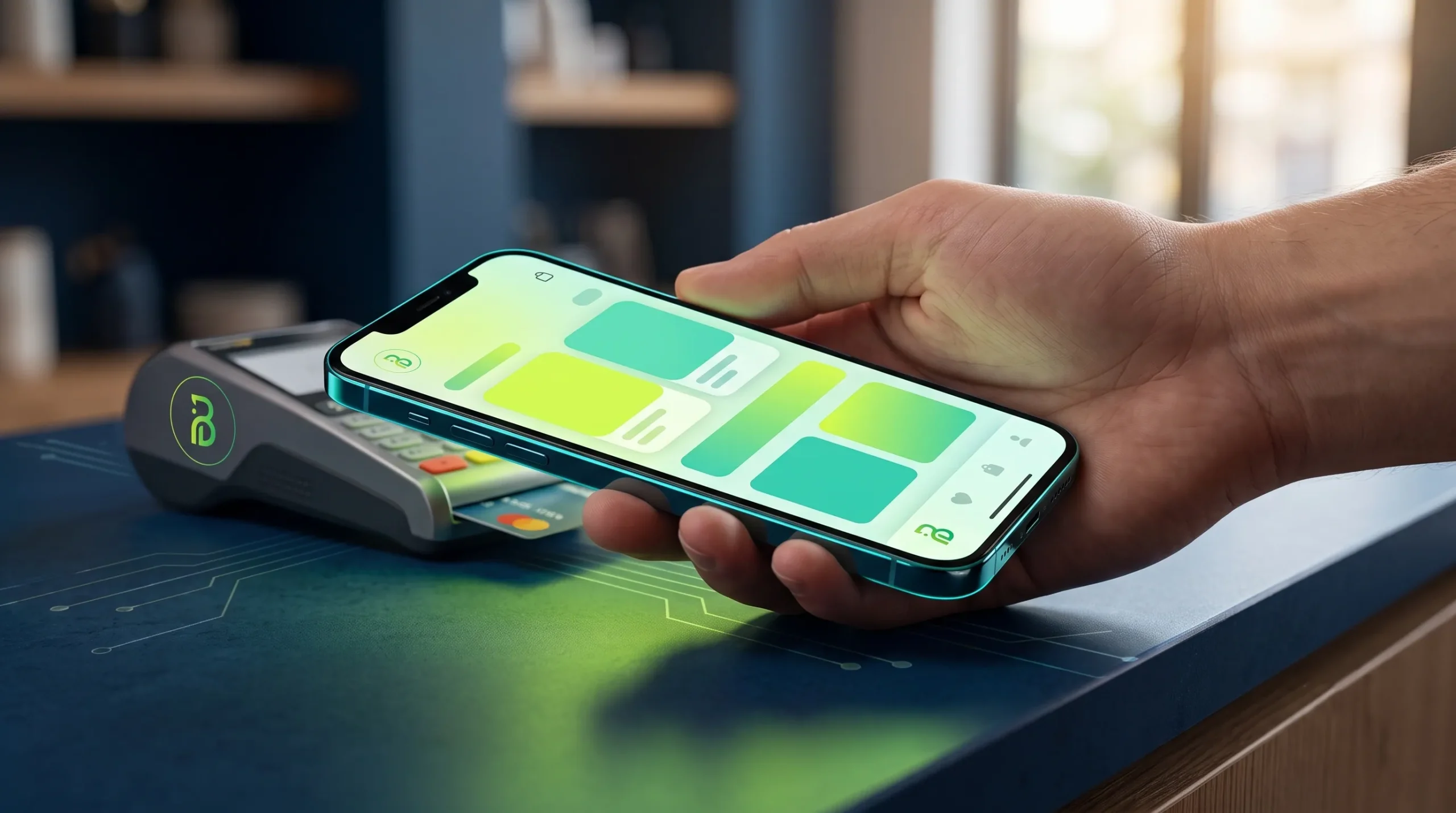
"My store sells well through the website… so do I really need an online store app?" We get this question from Saudi store owners almost every week, and the honest answer is not always "yes" and not always "no". An app is an investment decision whose cost ranges from a few thousand riyals for a ready-made platform app to more than SAR 120,000 for a fully integrated custom app, and the difference between a store that doubled its sales with an app and one that wasted its budget on it lies in the timing of the decision and the way it is executed, not in the app itself. In this updated 2026 guide, we give you the numbers on mobile shopping in Saudi Arabia, clear criteria for deciding whether your store deserves an app now or later, a frank comparison between an app, a responsive website and PWA technology, and the build options, from ready-made Salla and Zid apps to custom Flutter apps, with the cost of each option in Saudi riyals and the steps to launch on both app stores.
Before any discussion of cost, look at the behavior of your Saudi customer. The Kingdom has one of the highest smartphone penetration rates in the world, exceeding 95% of the population, and the Saudi e-commerce sector has passed the SAR 60 billion mark annually and keeps growing at one of the fastest rates in the region, driven by the Vision 2030 targets for increasing the share of the digital economy and electronic retail payments. More important than the size of the market is where purchases happen:
These numbers do not mean every store needs an app by tomorrow morning; they mean the app has gone from a luxury to a strategic option that should be studied against your own numbers, which is exactly what we will do in the next section.
An app amplifies what already exists; it does not create demand out of nothing. A store that works well becomes stronger with an app, while a store suffering from weak sales will not be rescued by an app, however good it is. Test your store against the following five criteria: if it meets three or more of them, investing in an online store app is economically justified:
The practical rule we use: if your store consistently processes 300 orders a month or more, you have a customer base large enough for the app to pay for itself within months by raising repeat purchase rates and average basket value. A store processing 30 orders a month, on the other hand, would do better to invest the app budget in marketing and improving its online store first, until it builds the required base.
This is the most important criterion of all. Products that are bought repeatedly (perfumes and personal care products, specialty coffee, dietary supplements, fashion, baby supplies, groceries) benefit the most from an app, because the customer comes back every few weeks and the app on their home screen reminds them of you before your competitors. A business that sells a product bought once every few years (luxury furniture, for example) will get far less value from an app.
Snapchat, TikTok and Google ads get more expensive year after year, and their algorithms are beyond your control. Push notifications in your app are a channel you fully own: a weekend offer, a back-in-stock alert, an abandoned cart reminder, all delivered free to a customer who has agreed to receive them. If you spend more than SAR 10,000 a month retargeting your existing customers with ads, the app will reduce this item alone enough to cover a large part of its cost.
People download an app for a brand they know and trust. If you have active accounts with a real audience, customers asking "Do you have an app?", and a considerable share of your orders coming from returning customers, your audience is ready. Having your store verified on the Maroof platform and your commercial registration visible strengthens this trust when you ask customers to download the app.
An abandoned app is worse than no app: notifications that never arrive, outdated offers and stalled updates all destroy trust. Before you decide, make sure you have an annual operating budget (roughly 15–20% of the development cost) and someone to run notification and offer campaigns every week, whether in-house or through your technology partner.
And when do you not need an app yet? If your store is in its first months, your monthly orders are below 100, your product is bought once and rarely repurchased, or your budget cannot support ongoing operation, postpone the decision and focus on improving the website and marketing. The time for an app will come later, when you are stronger.
Many store owners think the choice is binary: a website or an app. In reality there are three levels, and each has its proper place. A responsive website is an indispensable foundation for any store (it is the gateway for search engines and ads); PWA technology (progressive web apps) is a middle-ground solution that makes your website behave like an app installed on the home screen without going through app stores; and a native app delivers the strongest experience and loyalty. Here is the frank comparison:
| Comparison aspect | Responsive website | PWA | Mobile app |
|---|---|---|---|
| Estimated Cost | Included in building the store | SAR 8,000 – 25,000 | From platform plans to SAR 120,000+ |
| Presence on the App Store and Google Play | No | Very limited | Yes: an additional discovery and trust channel |
| Push notifications | No | Partial (more restrictions on iOS) | Full and segmented by customer behavior |
| Experience speed and performance | Good | Very good | The best: faster browsing and checkout |
| Fast payment (one-touch Apple Pay) | Available through the browser | Available with restrictions | Smooth, one step inside the app |
| Loyalty and staying on the customer's screen | Weak | Medium | The strongest: your icon in front of the customer every day |
| Best suited for | All stores, without exception | Mid-sized stores that want a faster experience at a limited cost | Stores with repeat orders and an active customer base |
Bateel's verdict: a responsive website is a must, a PWA is a smart extra for anyone who wants to improve the mobile experience on a limited budget, and an app is a growth investment for those who meet the readiness criteria above. The three options do not compete; they complement each other, and the most successful Saudi stores have both a strong website and an active app.
Decided that your store deserves an app? Excellent. You now have two main ways to build it, and each has its right audience:
If your store is built on Salla or Zid, both platforms offer a service that generates a ready-made mobile app that syncs automatically with your products, inventory and orders, as part of the higher plans or for an additional subscription. The advantages are clear: launch within a few weeks, an annual cost starting from a few thousand riyals, and maintenance and updates handled by the platform. The limits are just as clear: a near-uniform design that looks like the platform's other apps, limited customization of the interfaces and the purchase journey, and complete dependence on the platform: if you leave it, you lose the app. See our detailed comparison of Salla, Zid and WooCommerce if you are still at the stage of choosing the platform itself.
Here the app is built specifically for your brand: a complete visual identity, a purchase journey designed around your products, features templates do not offer (a dedicated loyalty program, smart recommendations, augmented reality try-on, recurring subscriptions), and full ownership of the source code. Flutter has become the first choice for this type of project in the Saudi market because it produces a single app that runs on both iOS and Android with near-native quality and saves 30–40% of the cost; we detailed the full trade-off in our comparison of Flutter and React Native. A custom app integrates via API with your current store whatever its platform (Salla, Zid, WooCommerce or a custom store), so you do not lose what you have built; you build on top of it.
The short rule: start with the ready-made platform app if your budget is limited and your requirements are standard (product display, cart, payment, notifications), as it is the fastest way to test the app's viability with the least risk. And go for a custom app when the customer experience becomes your competitive advantage: a strong brand that needs a distinctive identity, special features you are planning, a large order volume that justifies the investment, or a desire to be independent of platform restrictions. Many of our clients in our mobile app service started with a ready-made app and moved to a custom one after the numbers proved its value, a smart, gradual path we recommend.
Ready to turn your idea into a successful app?
Tell us about your store and your order volume, and we will help you choose the most suitable option, ready-made or custom, with a transparent quote within 48 hours.
Now to the question on everyone's mind: how much will it actually cost you to turn your store into an app? The following figures are based on the realities of the Saudi market in 2026 and our experience delivering store and app projects, and they cover the four common paths:
| Build option | Setup cost (SAR) | Estimated annual cost | Time to launch | Best suited for |
|---|---|---|---|---|
| Ready-made platform app (Salla / Zid) | 0 – 5,000 (activation fees) | 4,000 – 15,000 (within the plan or as a subscription) | 2 – 6 weeks | Platform stores with standard requirements |
| Semi-custom app (modified templates) | 15,000 – 35,000 | 3,000 – 8,000 maintenance and hosting | 4 – 8 weeks | Stores that want a personal touch on a mid-range budget |
| Fully integrated custom Flutter app | 50,000 – 120,000 | 8,000 – 25,000 maintenance and operation | 2.5 – 5 months | Strong brands with high order volumes and special features |
| Multi-vendor shopping platform (Marketplace) | 120,000 – 300,000+ | 25,000+ operation and team | 6 – 12 months | Projects that bring multiple sellers together in one marketplace |
Note that the setup cost is not the whole picture: add the fees for the two developer accounts (an Apple Developer account at around SAR 375 a year and Google Play at around SAR 94 one-time), payment gateway commissions on every transaction, and a marketing budget to launch the app and drive downloads. And remember that any app that actually sells must have a back end compliant with the e-invoicing requirements of the Zakat, Tax and Customs Authority (ZATCA); this comes ready automatically on Saudi platforms and is built as part of the project in custom apps.
If you want to dig deeper into pricing, we have written two complete guides: Mobile App Development Cost in Saudi Arabia 2026, covering every type of app and the factors that drive price, and our guide to the cost of building an online store in Saudi Arabia if you are still at the stage of building the store itself.
You will receive quotes of SAR 20,000 and SAR 90,000 "for the same idea", and the difference usually lies in five items you should read in the quote before the final figure: Does it include a complete dashboard for managing orders and inventory? Is integration with Saudi payment gateways (mada, Apple Pay, STC Pay, Tabby and Tamara) and shipping companies included? Do you own the source code after delivery? How long is the free warranty on bugs? And are publishing on both app stores and handling Apple's reviews part of the contract? A cheap quote that dodges these questions will later cost you many times the difference you saved.
Not all features are equal; some are decoration and some are sales machines. When designing a successful store app, these five features are the ones that make the difference in the numbers:
Development finished? The launch stage remains, and it has requirements many people are unaware of, which is why their apps get held up in reviews for weeks:
We have seen many Saudi stores enter an app project with enthusiasm and come out of it with a loss, and the reason is usually one of these five recurring mistakes:
What these mistakes have in common is that they do not show up in the quote, but after launch, when fixing them becomes expensive. That is why choosing a technology partner that knows the Saudi market and has already built both stores and apps is the strongest protection against all of them.
It depends on the path: ready-made platform apps (Salla/Zid) start from a few thousand riyals a year within the plans, semi-custom apps cost from SAR 15,000 to 35,000, while a fully integrated custom Flutter app ranges between SAR 50,000 and 120,000 depending on features, and it integrates with your current store via API without rebuilding it.
For stores with standard requirements, yes, and it is an excellent starting point at the lowest cost and risk. But when you need a distinctive visual identity, special features such as an advanced loyalty program and smart recommendations, or full independence with code ownership, a custom app becomes the right choice. Many stores start with a ready-made app and then move to a custom one after proving its value.
A ready-made platform app launches within 2–6 weeks and a semi-custom app within 4–8 weeks, while a fully integrated custom app usually takes two and a half to five months, including design, development, testing and publishing on both app stores.
Yes, once the store is ready: the conversion rate in an app is two to three times that of the mobile browser, the average basket is around 30% higher, and notifications recover a considerable share of abandoned carts for free. But an app amplifies a successful store; it does not fix a store that already suffers from weak demand or a poor experience.
A PWA is an advanced website that installs on the home screen and works like a lightweight app without going through the app stores, at a lower cost but with limited notification capabilities (especially on iOS) and no presence on the App Store or Google Play. A native app is stronger in performance, notifications and loyalty, and a PWA is a smart middle option for those who have not yet reached the app stage.
The takeaway we hope you leave this guide with: an online store app is not a "trend" decision but an equation of numbers: your order volume, the purchase frequency in your business and your readiness for ongoing operation. If you meet the criteria, an app is one of the highest-return investments in your e-commerce business; if you do not yet, building the foundation first is the smarter decision. Either way, you now know the real options and costs in riyals, and nobody can sell you an illusion in either direction.
At Bateel Tech Solutions, from the heart of Riyadh, we bring both areas of expertise together: building online stores and developing mobile apps with Flutter. That is why we assess your store's situation impartially and recommend the path that truly fits you, not the most expensive one. Send us your store link today and get a free consultation and a detailed quote within 48 hours.
Contact us now on WhatsApp: +966537272445
or via the Contact Us — and turn your store into an app that lives on your customers' screens.
