
Services
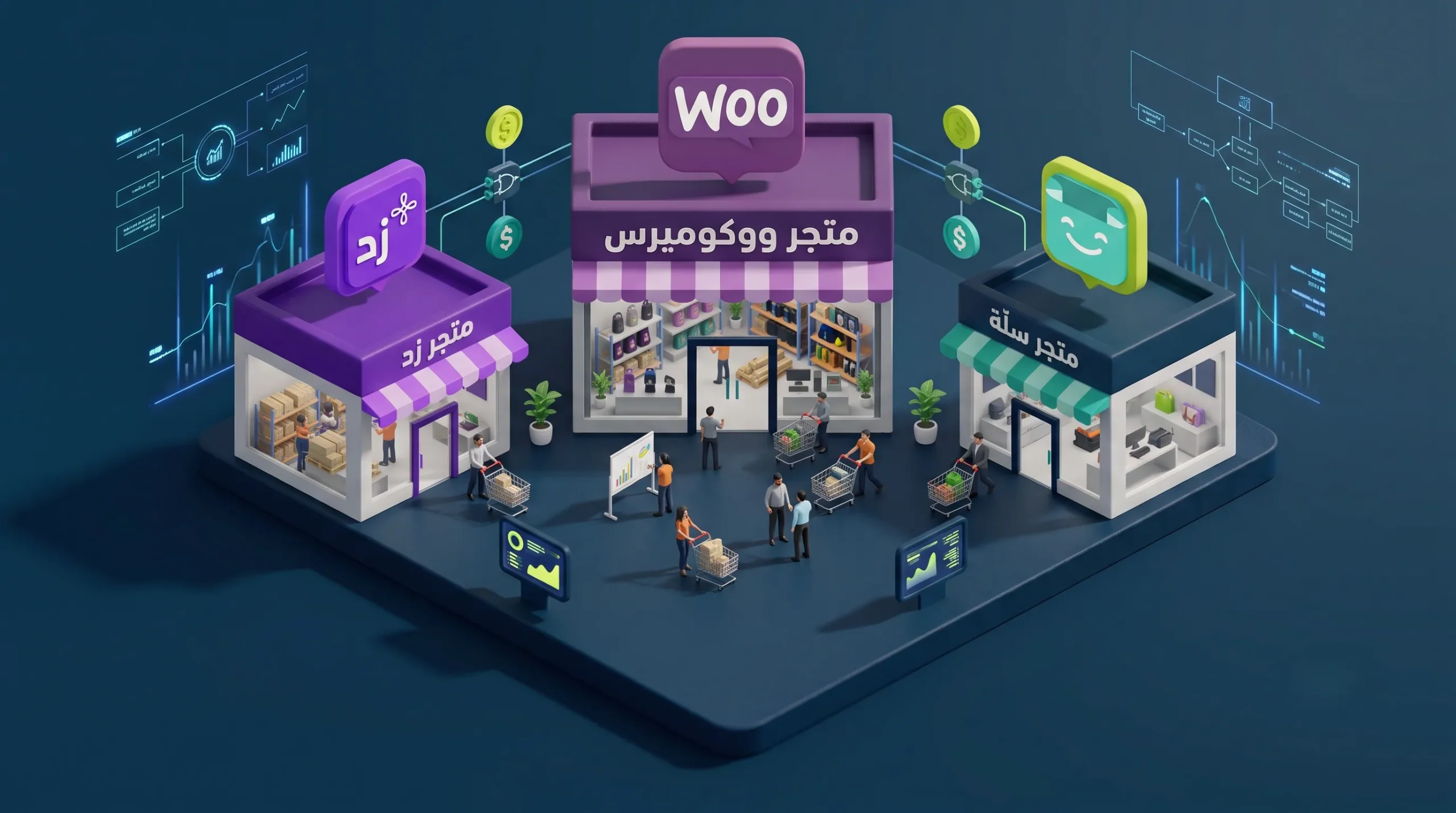
Comparing Salla and Zid with WooCommerce is one of the questions that most preoccupies anyone thinking about building an online store in Saudi Arabia today, because choosing the wrong platform can cost you thousands of riyals and months of wasted effort. The Saudi e-commerce market is growing fast, and estimates suggest it will exceed USD 30 billion in 2026, which means the opportunity is big but the competition is fiercer than ever. Between Salla, the easy-to-use Saudi platform, Zid, with its rich marketing tools, and open-source WooCommerce with its unlimited flexibility, business owners are left wondering: which platform suits my products, my budget and my future plans? In this comprehensive guide from the Bateel Tech Solutions team, we give you an updated 2026 comparison covering prices in Saudi riyals, commissions, payment gateways, shipping, SEO and ease of use, so you can reach a clear, well-considered decision before you spend a single riyal.
Before diving into the numbers and tables, it is important to understand each platform's philosophy and how it works, because any fair comparison of Salla, Zid and WooCommerce must start from one basic fact: the core differences between them are not only about price, but about the nature of the platform itself. Is it a ready-made cloud service where you pay a monthly subscription and start selling immediately? Or an open-source system that you fully own and are responsible for running? This fundamental difference later determines everything: cost, flexibility, growth limits, and even your relationship with your customers' data.
Salla is a Saudi company founded in 2016 in Makkah. Within a few years it became the first choice for hundreds of thousands of merchants in Saudi Arabia and the Gulf, and it has even been listed on the Saudi stock market. Salla's idea is simple: enable anyone to launch a professional online store in minutes, without any technical or programming experience. The platform is fully cloud-based, so you need no hosting, maintenance or updates, and everything runs from a single Arabic control panel: products, orders, shipping, payments and coupons. Salla also offers a huge app marketplace with hundreds of ready-made add-ons, a built-in affiliate marketing program, and the option to launch a mobile app for your store on the higher plans.
Zid is also Saudi, founded in Riyadh in 2017, and it serves tens of thousands of merchants with a clear focus on medium and large stores looking to grow and expand. Zid stands out for its strong operational backbone: advanced inventory management, integration with point-of-sale systems for stores that combine in-person and online sales, detailed reports and analytics, and built-in marketing tools such as abandoned cart recovery and scheduled campaigns. Zid also offers a shipping network with negotiated discounted rates with major Saudi carriers, and application programming interfaces (APIs) that allow deeper integration with accounting and ERP systems, which makes it a preferred choice for stores with complex operations.
WooCommerce is not a cloud platform like Salla and Zid; it is a free, open-source plugin that runs on WordPress, the world's most popular content management system, which powers more than 40% of websites. WooCommerce runs millions of stores worldwide and gives you what no ready-made platform can: full ownership of the code and data, unlimited freedom to customize design and functionality, and thousands of free and paid themes and plugins. The trade-off? You are responsible for everything: hosting, security, updates, backups, and manually connecting Saudi payment gateways. That is why WooCommerce usually needs a professional technical partner such as Bateel's web design team to build the store, secure it and get it ready to launch properly.
The following table summarizes the key points of comparison between the three platforms, based on the latest plans and published prices in 2026 (prices are approximate and subject to change, so always check each platform's official website before subscribing):
| Comparison aspect | Salla | Zid | WooCommerce |
|---|---|---|---|
| Monthly cost | A free plan with commission; paid plans from around SAR 99 to 499/month | From around SAR 149 to 599/month, depending on the plan | Free software + hosting from SAR 50 to 300/month |
| Commission on sales | A commission on every order in the free plan, reduced or removed in paid plans | No commission on most paid plans | No platform commission at all (payment gateway fees only) |
| Ease of use | Excellent (5/5): launch a store within hours with no experience | Very good (4/5): Arabic interface with a gentle learning curve | Moderate (3/5): requires technical expertise or a developer |
| Customization and flexibility | Elegant ready-made themes with limited customization | Varied themes and broader customization via API | Unlimited customization of design and functionality |
| payment gateways | mada, Visa, Mastercard, Apple Pay, Tamara, Tabby, enabled with one click | mada, Apple Pay, STC Pay, Tamara, Tabby, easy to activate | Requires manual integration via PayTabs, HyperPay, Tap or Moyasar |
| Shipping and delivery | Ready integration with SMSA, Aramex, RedBox and others | A shipping network with negotiated discounted rates and wide coverage | Shipping plugins installed manually, with setup required for each carrier |
| Search engine optimization (SEO) | Good basic tools (titles, descriptions, URLs) | Good tools with reasonable control over metadata | The strongest by far, with Rank Math and Yoast and full control over structure |
| Technical support | Round-the-clock Arabic support via chat and tickets | Arabic support with an account manager on higher plans | No official support; you rely on your developer or a tech company |
| Data ownership and control | The platform owns the infrastructure; you own your data within its limits | Like Salla, with broader export via API | Full 100% ownership of the code, data and hosting |
| Mobile app for the store | Available on higher plans | Available as an add-on service | Custom-developed on request |
As you can see, no platform wins on everything. The ease you gain with Salla and Zid comes at the cost of giving up full control, and the freedom you gain with WooCommerce comes at the cost of technical effort and a higher initial setup cost. That is why we always advise reading the table through the lens of your own priorities: if speed and simplicity top your list, focus on the ease-of-use and technical support rows; if long-term growth is the goal, focus on the customization, SEO and ownership rows.
No comparison of Salla, Zid and WooCommerce is complete without discussing local compliance. Salla and Zid both offer e-invoicing that complies with the requirements of the Zakat, Tax and Customs Authority (ZATCA) almost out of the box, which is a major advantage for Saudi merchants registered for VAT. In WooCommerce, compliance is achieved through specialized plugins or a programmatic integration with an approved accounting system. This is entirely possible, but it requires professional setup from day one so you do not run into violations later.
The prices listed on plan pages do not tell the whole story. There are hidden costs that many new merchants overlook: commissions on free plans that eat into profit margins as sales grow, monthly app and plugin fees that gradually add up, the cost of a paid theme or professional design, and sometimes the cost of migrating the entire store when you discover too late that the platform does not suit you. So let us break down the real first-year cost of each option in Saudi riyals.
In other words, a serious store on Salla will cost you roughly SAR 1,200 to 6,000 per year depending on the plan, plus the cost of any paid apps from the Salla app store.
The approximate annual cost of a medium-sized store on Zid ranges from SAR 1,800 to 7,200, and you may save part of it through the negotiated shipping rates the platform offers.
The bottom line: WooCommerce costs more at the start and less to run over the long term, especially since you pay no commission on your sales however much they grow. If you want to understand the technical cost components in more detail, see our guide to website design cost in Saudi Arabia 2026, which explains what determines the final price of any digital project.
Key advantages: fast launch within hours, round-the-clock Arabic technical support, ready integration with Saudi shipping and payments, a built-in affiliate marketing system, and a huge app marketplace. Key drawbacks: limited design customization compared with open solutions, a commission on sales in the free plan, and no ownership of the source code, which means your store is always tied to the platform.
Key advantages: some of the strongest marketing tools and reports in the Saudi market, advanced inventory management, point-of-sale integration, negotiated shipping rates, and flexible APIs for integrations. Key drawbacks: a higher average monthly cost than Salla, a slightly longer learning curve for beginners, and some advanced features limited to the higher plans.
Key advantages: free and open source, unlimited customization, the best online store platform in terms of control over SEO, thousands of themes and plugins, and full ownership of your data with no commissions. Key drawbacks: it needs hosting, maintenance and ongoing updates, it requires technical expertise or a reliable technical partner, security and backups are entirely your responsibility, and the cost of paid plugins can add up if you do not plan well.
Are you ready to launch your website or online store?
The Bateel Tech team builds you a professional solution that achieves your business goals, with transparent pricing and ongoing support.
After all of the above, here is a practical summary to help you decide based on your current situation and future ambitions. Remember that the goal of any Salla, Zid and WooCommerce comparison is not to declare an absolute winner, but to match each platform's strengths with your project's stage: the size of your product range, your budget, your technical expertise and your expected traffic sources.
Ready-made platforms are excellent for most stores, but they hit their ceiling when your requirements go beyond the usual. From our experience building dozens of stores for Saudi companies, we have seen successful merchants start on a ready-made platform and then hit a wall: a feature essential to their business model is not available, a necessary integration with their internal systems is impossible, or their store design has become a copy of thousands of competing stores. The need for a custom-built store or an advanced WooCommerce solution appears in clear cases:
This is where Bateel's e-commerce store design service comes in. We do not sell you a platform; we start by studying your business model and then recommend the option that truly fits: it may be a Salla store that we set up professionally for you, a complete WooCommerce store that we build, secure and optimize for SEO, or a solution built from scratch that integrates with Odoo ERP and the payment and shipping systems you need. As a Saudi company in Riyadh, we understand local market requirements, from e-invoicing and ZATCA integration to the behavior of Saudi shoppers themselves.
However convincing theoretical comparisons may seem, building an online store is an investment decision that deserves a few extra minutes of structured thinking. Here are five practical steps we go through with our clients before choosing any platform; they will save you a lot of backtracking and regret later:
For someone launching their first store without technical experience, Salla is the easiest and fastest option thanks to its simple interface and its free plan, which lets you test the idea without a financial commitment. Zid becomes the smarter choice when your store grows and you need more advanced inventory management, reports and marketing tools, or when you run a physical branch alongside your online store.
Yes, migration is possible and happens often when a store outgrows ready-made platforms. Products and customers are transferred through export files or APIs, but the process needs careful planning to protect your store's Google rankings through correct URL redirects, and it is a task best handed to a specialized team.
Yes, through licensed Saudi payment gateways such as PayTabs, HyperPay, Tap and Moyasar, which offer ready-made WooCommerce plugins that support mada, Apple Pay and installments via Tamara and Tabby. The only difference is that activation is manual and requires technical setup, unlike Salla and Zid, where a payment gateway is activated in a few clicks.
Yes. Under the Saudi E-Commerce Law, your business must be documented with either a commercial registration or, for individuals, a freelance certificate. A commercial registration is also a prerequisite for activating online payment gateways and verifying your store on the Business Platform, which noticeably increases customer trust in your store.
WooCommerce clearly wins on SEO because it gives you full control over URL structure, structured data and site speed through plugins such as Rank Math and Yoast. Salla and Zid provide good basics that are enough for small stores, but if your strategy depends on topping Google results and attracting large volumes of free traffic, WooCommerce's flexibility combined with a professional SEO plan is the strongest formula.
There is no one-size-fits-all answer in the Salla vs. Zid vs. WooCommerce comparison: Salla gives you the fastest start with the least effort and cost, Zid gives you the strongest operational backbone and growth tools for medium and large stores, and WooCommerce gives you limitless freedom and ownership in exchange for greater technical responsibility. To sum up the whole guide in three sentences: start with Salla if you are at the beginning of the road and want simplicity, move to Zid when you need deeper operations and reporting, and choose WooCommerce or a custom-built solution when full control, SEO and advanced integrations become a strategic priority. The golden rule is always: choose the platform that fits your current stage without limiting your future ambitions.
If you are still unsure, you do not have to take the risk alone. The Bateel Tech Solutions team in Riyadh offers you a free consultation in which we analyze your business model and recommend the most suitable platform, then build your entire store, from design to integration with payments, shipping and e-invoicing, with marketing and SEO plans that make sure your store does not remain just a beautiful link with no sales. Contact us now via WhatsApp or visit Contact Us Page and start your online store journey with a well-informed decision and confident steps.
