
Services
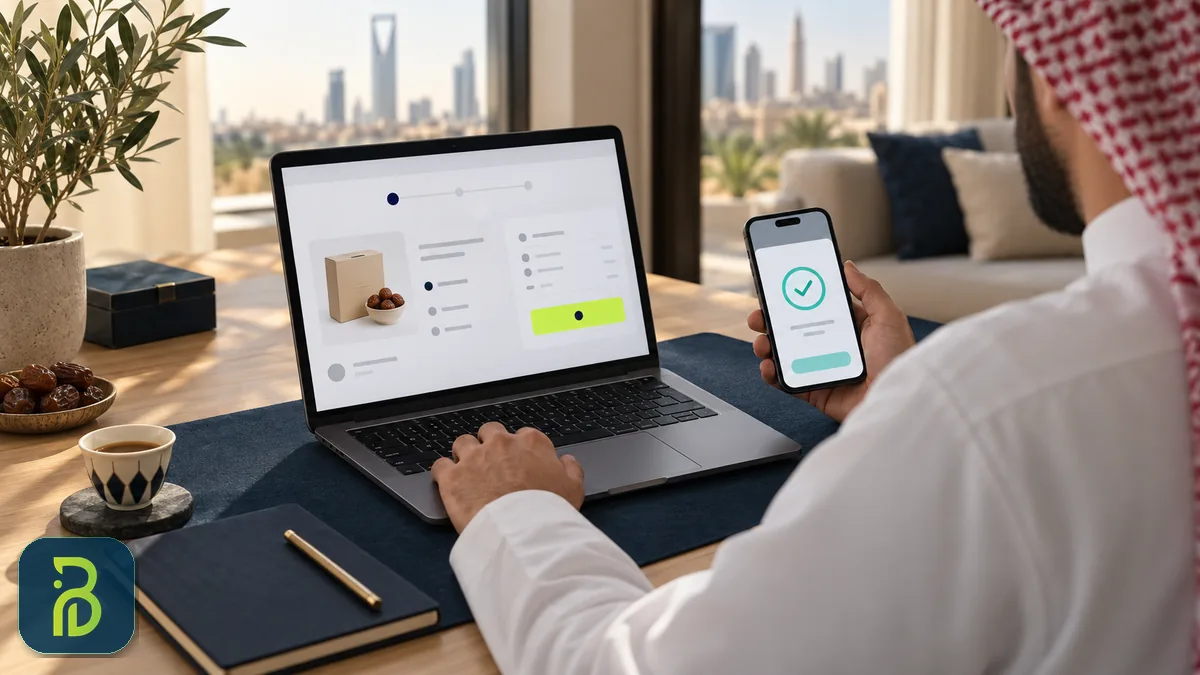
Is accepting mada cards enough for your store, or do you need Apple Pay too? The short answer: enable both, because in Saudi Arabia Apple Pay does not compete with mada, it runs on top of it. Most people who pay with Apple Pay use a mada card saved on their phone, and pay with a single touch instead of typing 16 digits and a verification code. Apple charges merchants no fees at all; what you pay are the payment gateway's own fees, based on the card type. On this page about Apple Pay for online stores in Saudi Arabia in 2026, we answer the real acceptance question for Apple Pay and Google Pay compared with local wallets, explain the fees in SAR with a worked example, walk through setup on Salla, Zid and WooCommerce, and cover the mistakes that hide the payment button from your customers without you noticing.

The direct answer: Apple Pay for online stores in Saudi Arabia is the most widely accepted digital wallet today, supported by most local payment gateways and platforms. Google Pay is newer: it launched in Saudi Arabia in September 2025 over the mada network, starting with point-of-sale payments, and support for in-app and web payments across banks and gateways is still rolling out. Local wallets such as STC Bank (formerly stc pay) remain a complementary option for a segment of customers, not a replacement for either.
Before the numbers, a note in fairness: the Saudi Central Bank (SAMA) does not publish a separate share for each wallet. But the overall picture is clear. SAMA announced that electronic payments reached 85% of all retail payments in 2025, compared with 79% in 2024, across roughly 14.6 billion transactions, and attributed the growth mainly to mada transactions at points of sale and in e-commerce. And in the Checkout.com MENA digital commerce report 2026, 79% of Saudi consumers said they shop using digital wallets.
| Payment method | Launched in Saudi Arabia | Who uses it | Acceptance in online stores (2026) |
|---|---|---|---|
| Apple Pay | February 2019 | iPhone, iPad, Mac and Apple Watch owners | Very wide; supported on Salla, Zid and most WooCommerce gateways |
| Google Pay | September 2025 (point of sale), with online payments expanding gradually | Android device owners | Moderate and growing; varies by gateway and issuing bank |
| mada (entering the card directly) | The national network for decades | Almost everyone with a local bank account | Essential, cannot do without it |
| STC Bank (formerly stc pay) | 2018 as a wallet, later became a digital bank | A segment of expats and young people | Available with a number of gateways; enable it if your customers ask for it |
In practice, do not ask "Apple Pay or mada?". The right order is mada and Apple Pay first, then Visa and Mastercard, then Google Pay if your gateway supports it, then local wallets depending on your audience.
Apple Pay is neither a card nor a bank account; it is a payment method that carries the customer's real card inside their phone. When a customer adds a mada card from Al Rajhi, SNB or Riyad Bank to the Wallet app, the system generates a token instead of the original card number. When they pay in your store, the transaction goes through the same mada network and settles the same way. The difference is that the customer types nothing; they simply confirm with Face ID or a fingerprint.
"mada alone", on the other hand, remains essential for Android customers, for anyone buying from a computer that does not support Apple Pay, and for those who have not added their card to their phone yet. So the real mistake is not settling for mada or for Apple Pay; it is leaving one of them out.
Rule number one: Apple charges Saudi merchants no fees on Apple Pay transactions. The fees you see on your statement are the payment gateway's fees, usually calculated by the card the customer holds inside Apple Pay: a mada card is charged at the mada rate, and a credit card at the credit card rate.
Here are some published examples for illustration. Tap Payments states that all mada transactions cost 1%, capped at SAR 200 per transaction, including mada transactions via Apple Pay at no extra fee. On Zid, Zid Pay rates vary by plan and card type, so check the fee table for your plan in the dashboard before comparing, and note that fees are usually shown excluding VAT. Salla states in its help center that Apple Pay adds no fees on top of the underlying payment method's fees.
| Card type, inside or outside Apple Pay | Approximate fee range | Cost of a SAR 300 order (before VAT) | After adding 15% VAT on the fees |
|---|---|---|---|
| mada | 1% to 1.5% + up to SAR 1 fixed | SAR 4 to 5.5 | Approx. SAR 4.6 to 6.3 |
| Local Visa and Mastercard | 2.2% to 2.75% + about SAR 1 | SAR 7.6 to 9.25 | Approx. SAR 8.7 to 10.6 |
| International cards and American Express | 3% to 3.5% + about SAR 1 | SAR 10 to 11.5 | Approx. SAR 11.5 to 13.2 |
Figures are approximate as of 2026 and vary by gateway, subscription plan and monthly sales volume, and are usually published excluding 15% VAT. Review your contract with the gateway before basing your pricing on them.
Monthly payment cost = (mada sales × mada rate) + (credit card sales × their rate) + (number of transactions × fixed fee), then add 15% VAT on the total fees. Example: a perfume store in Jeddah sells 600 orders a month at an average of SAR 300, 70% of them mada (by card or Apple Pay) and 30% credit cards. mada sales of SAR 126,000 × 1% = SAR 1,260, card sales of SAR 54,000 × 2.3% = SAR 1,242, and fixed fees of SAR 600. The total is SAR 3,102, or about SAR 3,567 after VAT, which is less than 2% of sales. Note that Apple Pay did not add a single riyal to the cost, because the fees follow the card, not the payment method.
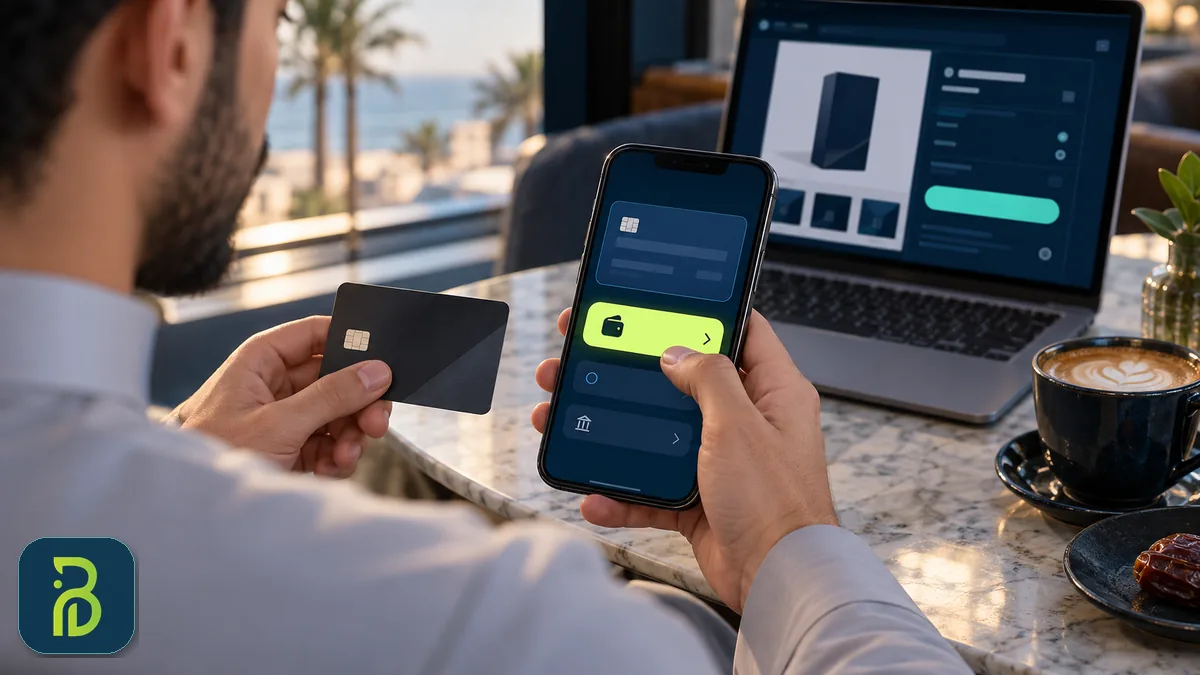
Apple Pay button not showing in your store, or not enabled yet?
We enable mada and Apple Pay in your store and test them on real devices, from domain verification to refund testing.
How you enable it depends on the platform your store is built on. If you have not chosen a platform yet, our comparison of Salla vs Zid vs WooCommerce will help you decide. What all three have in common: no online payment is activated until the store and its documents are verified, meaning the Commercial Registration or freelance certificate, and a bank account in the business's name. You will find the full list in our guide to the requirements for opening an online store in Saudi Arabia.
The easiest option. According to the Salla help center, Apple Pay is enabled automatically as soon as mada and Visa are activated on your store after verification, with no technical setup needed. If you use an external payment gateway instead of Salla Payments, follow that gateway's integration steps in your dashboard. After activation, test from a real iPhone, because the button does not appear in the preview on a Windows computer.
On Zid, activation usually goes through Zid Pay or a connected gateway. Once your activation request is accepted and your documents are approved, payment methods including Apple Pay appear in your payment settings, and you can control whether they are shown. Because fees differ between Zid plans, compare the mada rate and the card rate on your current plan before upgrading or staying on it.
Here the technical responsibility lies with you or your developer, and this is where store owners stumble most. The steps in brief:
apple-developer-merchantid-domain-association, which is uploaded to the /.well-known/ path on your site with no extension, then you click "Verify" and then "Register" in the gateway dashboard. Adding an extension such as .txt to the file, or a server that blocks the .well-known folder, are the two most common reasons verification fails.And if your store is custom-coded, the same logic applies through a direct integration with the gateway's API, which we usually handle as part of Bateel's e-commerce store design and development service.
In a mobile app, domain verification is not enough. You need a Merchant ID from an Apple Developer account in your business's name, and a Payment Processing Certificate created in coordination with the payment gateway, then you enable the Apple Pay capability in the app project settings. On its implementation page for developers, Apple recommends using the same Merchant ID and certificate for both the app and the website if you support both. The common mistake is creating the ID and certificate under the developer's account rather than your business's, so payments break or the certificate becomes hard to renew once the relationship ends. That is why your mobile app development contract should require the developer account and Merchant ID to be in your business's name from day one.
Google Pay launched in Saudi Arabia on 15 September 2025, after an agreement between SAMA and Google to run it over the mada network. It started at points of sale with Al Rajhi and Riyad Bank customers, other banks and cards joined gradually, and support for in-app and web payments is expanding depending on the gateway. Our recommendation: if your gateway or platform supports it, enable it, because until recently Android customers had to enter their cards manually. But do not delay your store launch for it, and check its rate in your gateway fees, as some platforms price it higher than mada.
The stc pay wallet has become a licensed digital bank called STC Bank, and paying with it is still available through a number of payment gateways as a separate method, so STC Pay remains an option for stores under its new name. It adds the most value in stores where expats and young people buy heavily, such as electronics, top-ups and digital gift cards. A luxury gift store targeting iPhone customers in Riyadh, on the other hand, may not gain much from it.
The number of payment methods is not a goal in itself. Ten buttons on the checkout page confuse a customer just as much as missing their preferred method. Order the buttons so that Apple Pay appears first on iPhones, and mada first on all other devices.
Most of the complaints we hear from store owners, such as "I enabled Apple Pay and it does not show" or "it shows but nobody uses it", come down to one of these mistakes:
And if you are spending on ads that bring in mobile visitors only to lose them at checkout, the problem is not the ad. Bateel's digital marketing team usually starts by auditing the purchase journey before raising the budget.
Apple Pay has been the most widely accepted wallet in Saudi online stores since 2019, and it mostly runs on the same mada cards. Google Pay launched in September 2025, starting with points of sale, and its online acceptance is widening gradually depending on the gateway. Local wallets such as STC Bank complement a specific segment. SAMA does not publish a separate share for each wallet.
No. Apple charges merchants no fees. You only pay the payment gateway's fees based on the card used: about 1% to 1.5% plus a fixed fee of up to one riyal for mada, and a higher rate for credit cards. Figures are approximate, usually exclude 15% VAT, and vary by gateway and plan.
Yes. You can add a mada card from Saudi banks to the Wallet app on iPhone and pay with it in online stores and at points of sale. The transaction goes through the mada network and most gateways charge it at the same mada rate, with no extra fee for Apple Pay, and the amount settles to your account as usual.
Usually for one of three reasons: you are testing from a device or browser that does not support it, there is no card added to Wallet, or your store's domain has not been verified with the payment gateway. On WooCommerce, check the verification file in the .well-known folder and make sure every subdomain, such as www and the domain without it, is registered.
Yes, because Apple Pay turns paying with mada itself into a single touch instead of entering the card and a verification code, at no extra cost to you. iPhone users make up a large share of Saudi shoppers, and missing their preferred method can push them to abandon the cart and complete the purchase at a competitor's store.
In Saudi Arabia, Apple Pay and mada work together; neither competes with the other. Enabling both does not raise your fees, but it shortens the most important moment in the customer journey: the moment of payment. And if you are planning a new store, start with our guide on how to start an online store in Saudi Arabia, then make the checkout page the first thing you test before launch.
At Bateel Tech Solutions in Riyadh, we deliver Salla, Zid, WooCommerce and custom stores with mada and Apple Pay enabled and tested on real devices, including domain verification, gateway integration and refund testing. Contact us on WhatsApp or through the Contact Us Page, and get a free consultation for your store.
